

How to Work with a Freelance Graphic Designer: 7 Lessons from a Creative Director
Client guide · creative collaboration
Great design does not come from a longer list of instructions or endless revision rounds. It comes from a clear problem, the right creative partner, and a working process that protects both strategic thinking and execution.
My perspective: after more than 25 years leading brand identity, editorial, digital, Arabic, and bilingual design projects, I have found that the quality of the collaboration usually determines the quality of the result.
1. Begin with the business problem—not a list of deliverables
A useful brief explains why the project exists before it lists what must be produced. “We need a logo” is a deliverable. “We need to reposition the organisation for a new audience without losing existing recognition” is a design problem.
Before approaching a freelance graphic designer, clarify:
- The business objective: what should change after the project succeeds?
- The audience: who must understand, trust, or act on the design?
- The context: where will the work appear and what must it work alongside?
- The deliverables: which formats, sizes, languages, and applications are required?
- The constraints: timeline, budget, approvals, technical requirements, and existing brand rules.
- The success criteria: how will the team judge whether the solution is effective?
A designer can help refine the brief, but the client must make the organisational priorities visible. The University of Fujairah identity case study shows how a broad institutional ambition can be translated into a focused visual identity exploration.
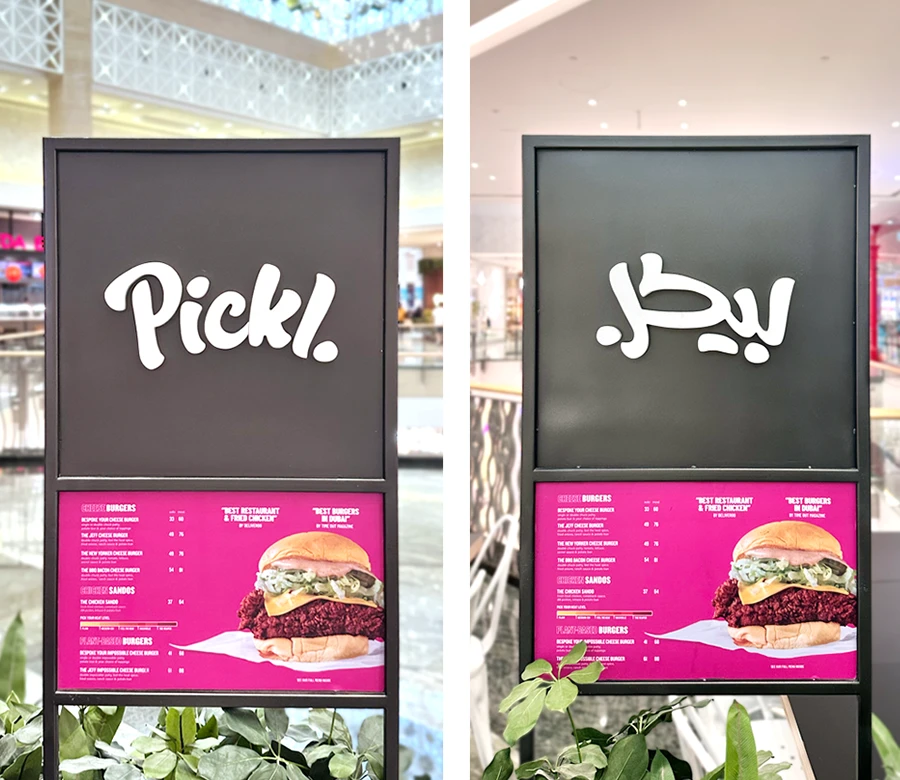
Arabic logo adaptation in practice
Localization must preserve recognition
The Arabic adaptation of Pickl shows why bilingual identity work is more than translation. The Arabic lettering changes script and reading direction while preserving the original logo’s informal rhythm, weight, and recognisable personality.
2. Choose a designer for judgement, not only visual style
A polished portfolio matters, but it is not enough. Look for evidence that the designer can understand the problem, explain decisions, work at the required level of complexity, and deliver a system rather than an isolated image.
Review relevant case studies and ask:
- Is the thinking behind the work visible?
- Has the designer solved a comparable business or communication problem?
- Can they work across the languages, formats, and cultural contexts involved?
- Do they explain their process, responsibilities, and outcomes clearly?
- Does their working style suit your decision-making structure?
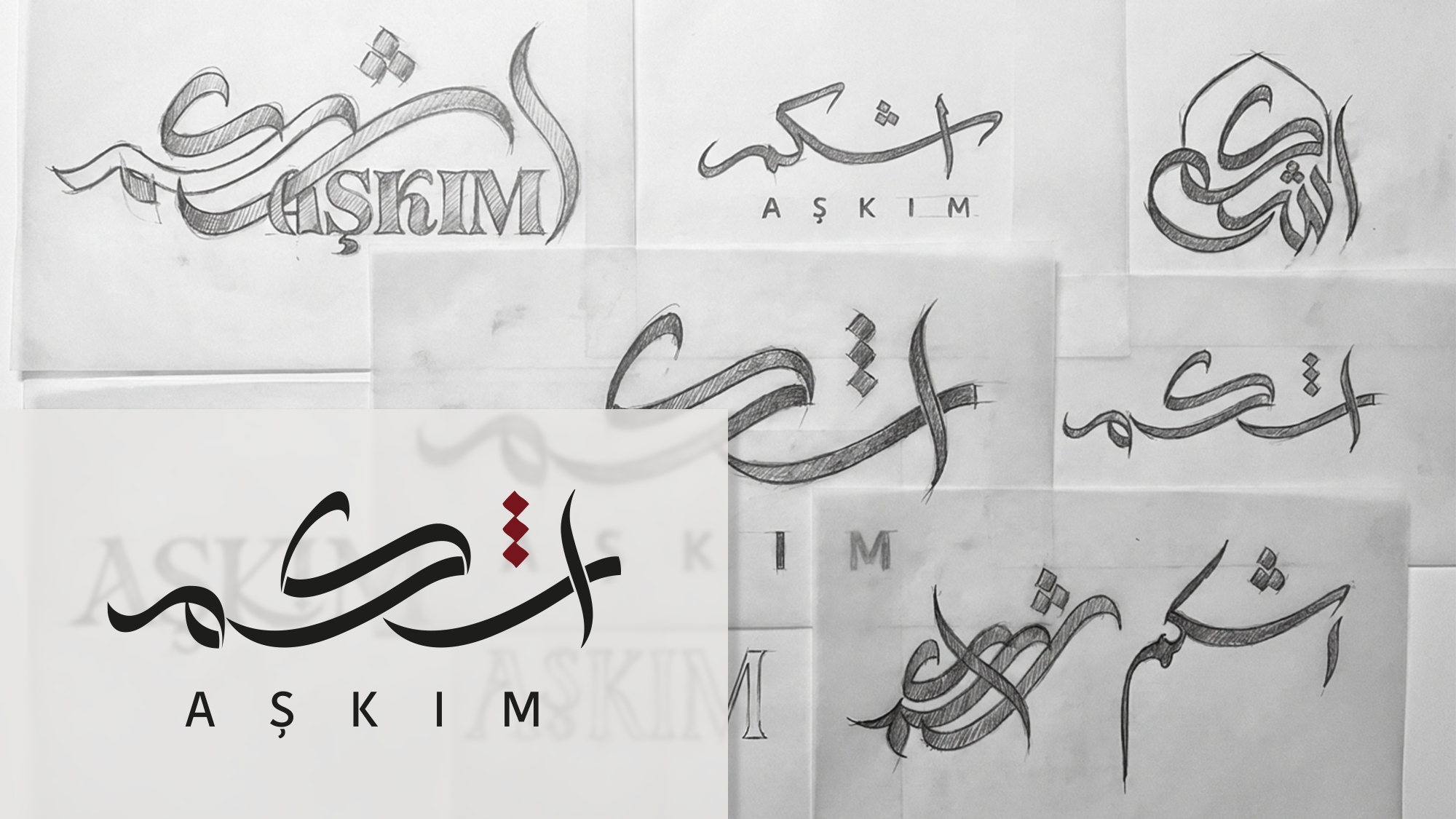
For Arabic and bilingual identities, selection requires additional care. Naming, reading direction, script compatibility, and optical balance between Arabic and Latin forms cannot be solved through translation alone. I explore these issues in Arabic–English Bilingual Logo Design.
Avoid unpaid speculative work. If both sides need to test the relationship, use a small paid discovery phase or a clearly scoped paid pilot. Senior creative judgement should not be reduced to a free sample.
What a portfolio should reveal
A portfolio should show more than a preferred aesthetic. Look for evidence of problem definition, strategic alternatives, system thinking, and consistent execution across real applications.
When the project is complex, the most relevant question is not “Do I like this style?” but “Can this designer understand our context and make defensible decisions?”

3. Agree the scope, rights, and change process before design begins
A professional agreement protects the relationship from assumptions. It should make the boundaries of the work visible before creative development starts.
- Deliverables: final applications, dimensions, languages, and file formats.
- Milestones: discovery, concepts, refinement, approval, and handover.
- Revision rounds: what is included and what becomes additional work.
- Usage and ownership: how the work may be used, when agreed rights transfer, and whether source files are included.
- Third-party assets: responsibility for fonts, stock imagery, licences, and production costs.
- Payment: deposit, milestone payments, due dates, and the process for approved additions.
Scope is not a tool for restricting collaboration. It gives both sides a stable base from which good decisions can be made. If the brief changes, document the change, its effect on timing, and any additional fee before continuing.
4. Create one clear decision process for feedback
Design projects become inefficient when different stakeholders send separate and contradictory instructions. Agree in advance who gives feedback, who approves the work, and how comments will be consolidated.
The most useful feedback refers to the objective rather than prescribing a visual fix:
| Less useful feedback | More useful feedback |
|---|---|
| “I don’t like it.” | “This direction feels too informal for the institutional audience we identified.” |
| “Make the logo bigger.” | “The brand is losing prominence when this layout is viewed at presentation size.” |
| “Try another colour.” | “This palette is too close to our competitor and does not express the positioning in the brief.” |
| “Give us more options.” | “The current directions solve the same problem; we need to explore a meaningfully different strategic route.” |
Collect comments into one document, resolve internal disagreements before sending them, and distinguish mandatory requirements from personal preferences. This reduces unproductive revision cycles and gives the designer a coherent problem to solve.
See the process in practice: the al Saada rebranding case study demonstrates how an established government-led identity can be refined while protecting recognition and stakeholder trust.
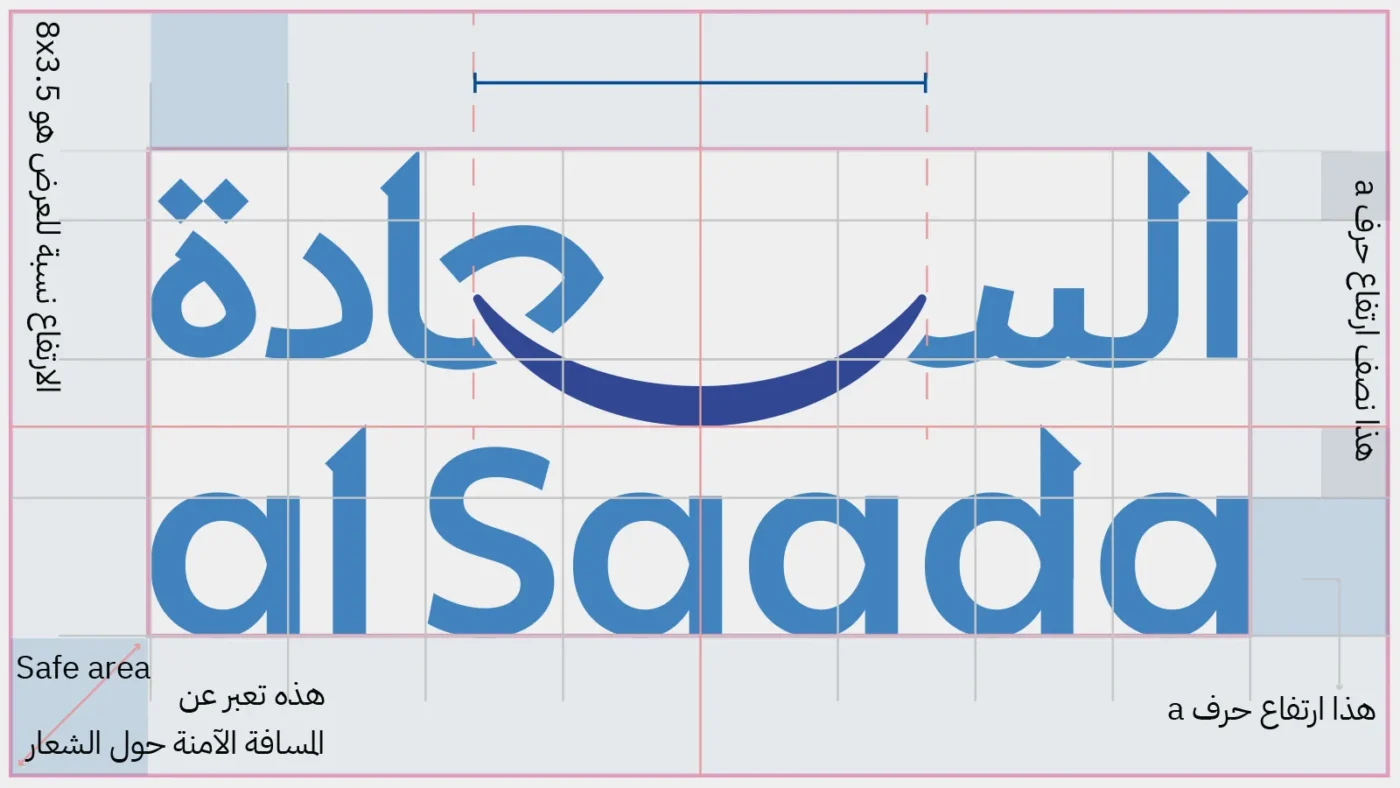
Feedback should explain the impact
The strongest feedback gives the designer context: what feels wrong, for whom, in which application, and why it conflicts with the agreed objective.
When clients explain the communication problem instead of dictating the visual solution, the designer can use professional judgement and often find a better response than the first requested fix.

5. Give the designer room to use professional judgement
The client brings knowledge of the organisation, market, audience, and internal constraints. The designer brings expertise in visual hierarchy, composition, typography, systems, and communication. Strong collaboration respects both forms of knowledge.
Explain the problem and the reason behind a concern, then allow the designer to propose the visual response. Micromanagement usually produces a collection of client instructions rather than a coherent design solution.
Trust does not mean accepting every recommendation. It means evaluating the work against the agreed objectives, asking questions, and making informed decisions without turning the designer into an operator.
6. Pay fairly, approve additions, and protect the schedule
Payment is part of the creative process because it affects trust, availability, and momentum. Agree the commercial terms before work begins, pay deposits and milestones on time, and do not treat new deliverables as minor revisions.
Clients also protect the schedule by returning consolidated feedback when promised, providing required content and approvals, and identifying delays early. A project cannot remain on its original timeline when the inputs or scope have changed.
7. Build a relationship—not a series of disconnected transactions
A designer who understands your organisation accumulates valuable context: how decisions are made, which standards matter, how the audience responds, and how the brand should behave across different applications. That knowledge improves consistency and reduces the time required to start every project.
Long-term collaboration may take the form of repeat projects, an ongoing creative partnership, or a defined advisory role. It should never mean unlimited availability or unclear scope. The relationship becomes stronger when expectations remain professional.
Warning signs that collaboration needs attention
- There is no agreed decision-maker.
- The brief changes repeatedly but the deadline and fee do not.
- Feedback is based only on personal taste.
- Unpaid speculative work is treated as a normal selection method.
- Rights, source files, fonts, or third-party assets are never discussed.
- Long silences are followed by urgent requests.
- The designer cannot explain the reasoning behind the work.
A practical collaboration workflow
- Discovery: define the business problem, audience, context, and success criteria.
- Agreement: confirm scope, deliverables, milestones, rights, fees, and responsibilities.
- Creative direction: review a limited number of strategically different routes.
- Refinement: consolidate feedback and test the selected direction in relevant applications.
- Handover: approve the final work, settle payments, transfer agreed files, and document how the system should be used.
From advice to evidence
Explore how collaboration works in real projects
Good process becomes credible when it can be seen in the work. The following resources show how strategic questions, Arabic and bilingual requirements, stakeholder needs, and visual systems are handled in practice.
Arabic and bilingual identity knowledge
Read Arabic–English Bilingual Logo Design for a detailed framework covering naming, script relationships, optical parity, reading direction, and the difference between translation and authorship.
Strategic branding case studies
Explore the Strategic Arabic Branding Case Studies to see the challenge, my role, the design response, and the outcome across institutional identity, government rebranding, products, hospitality, and publishing.
Need a senior creative partner?
I work as an independent Creative Director and Arabic Branding Expert on projects that require strategic clarity, bilingual visual thinking, Arabic typography, and carefully managed design systems. If your project needs more than execution, begin by sharing the business challenge, audience, required languages, timeline, and decision process.
View case studies Explore the portfolio Start a project
The goal is not to control every design decision. It is to build the conditions in which good decisions can be made.
